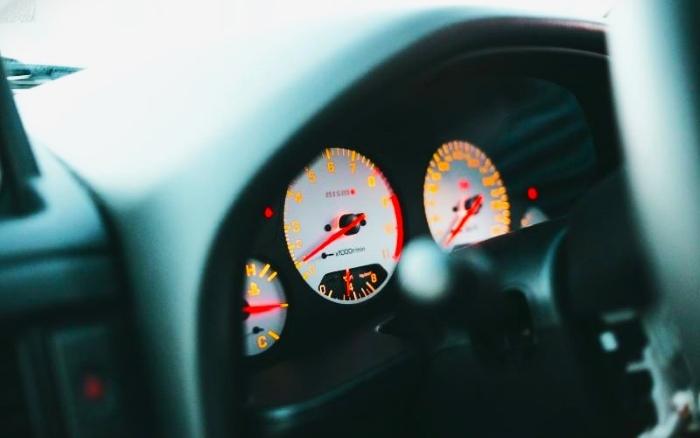

Why a Water Temperature Sensor Cannot Read Steam
When your car overheats but your water temperature gauge suddenly drops, something’s wrong. The truth is this, your water temp sensor cannot read steam because steam is not liquid.
Sensors are designed to read heat through liquid coolant, not vapour or air.
Designed for Liquid – Not Vapour
Water temperature sensors are calibrated for liquid ranges, typically from -40°C up to around 120°C. Once the coolant boils off, and steam surrounds the sensor, it falls outside the conditions the sensor is built for.
Steam Doesn’t Transfer Heat the Same Way
Liquid coolant gives a reliable, consistent heat reading. Steam transfers heat much slower, which means the sensor either drops its reading or sends no reading at all.
The Sensor Can Go ‘Dry’
In an overheating system, the coolant can boil off and level can fall below the height of the sensor. Now that sensor is sitting in steam or air, and your gauge will likely give a false low reading.
Real-World Example
You’re driving uphill with a trailer on a hot day so your engine is working extra hard.
You smell coolant but the gauge looks fine… then it drops.
That’s a sensor telling you things are good, when they’re much worse.
What really happened:
- Coolant boiled and overflowed from pressure
- The level dropped below the sensor
- The sensor stopped reading properly
- The dash gauge dropped suddenly
- The engine temp kept rising
Now you’re risking a blown head gasket, or worse, before you even realise something’s wrong.
Why False Gauge Readings Are Dangerous
When you rely on a faulty reading, you might:
- Keep driving while the engine overheats
- Miss early signs of cooling system failure
- End up with cracked heads, warped blocks or cooked seals
It can happen very quickly and if the sensor gives a false sense of safety, you lose your only visible warning.
How We Diagnose Cooling Issues at Tony Allen Auto Services
We deal with cases like this every week. Here’s what we do:
- Check coolant level once engine is completely cool
- Inspect hoses and joints for leaks
- Pressure test the cooling system under load
- Read live data from the ECU — not just the gauge
- Feel radiator hoses, checking for proper flow and thermostat function
Pro tip from the workshop: If your gauge suddenly drops when the car is struggling and especially if you smell coolant, stop the vehicle and get it checked.
Summary: Key Takeaways
- Your water temp sensor only works when submerged in liquid coolant
- Steam provides inaccurate heat transfer, so the reading becomes unreliable
- A sudden drop in the temperature gauge as the engine heats up is a red flag
- Always check coolant level after overheating and get a system inspection done
Don’t rely solely on your dashboard.
If something doesn’t feel right, trust your instincts.
Book a check-up with Tony Allen Auto Services before a misread gauge leaves you with a ruined engine.
Frequently Asked Questions
Q1. Can a water temperature sensor read steam?
No. It requires contact with liquid coolant. Steam surrounds the sensor with vapour, which doesn’t transfer heat as accurately.
Q2. Why did my temp gauge drop suddenly while driving?
Your coolant may have boiled off. This leaves the sensor dry or in steam, causing it to send an incorrect low reading.
Q3. How do I know if my car is overheating?
Watch for other signs – steam from the bonnet, a strong coolant smell, bubbling, or unusual engine behaviour. Don’t rely on just the gauge. Stop and check.
Q4. What should I do if the gauge is erratic or stuck low?
Stop safely. Let the engine cool. Check the coolant level before restarting. Call Tony Allen Auto Services to inspect it professionally.
Your temperature gauge is only helpful when it shows the truth.
If it’s not reacting how you’d expect or worse, dropping in the middle of a hot drive get your cooling system checked.
Schedule a service with Tony Allen Auto Services before a small problem becomes an expensive one. Our team are here to help.

